May 21, 2012

New RESPA Regulations to help drive out Bait & Switch Artists of the Morgage Industry

Shysters Stymied - New RESPA laws protect Home BuyersRESPA changes enacted January 16, 2010 will benefit  Simi Valley home buyers and help them understand the costs of their financing on the new good faith estimate (GFE) and HUD-1 settlement statements.

When shopping for a loan, the mortgage broker must give a good faith estimate to the client that outlines the costs of the loan. Prior to January 16, 2010 the GFE was a pretty general estimate and could fluctuate greatly between the time a home buyer identified a property to purchase and finally closed escrow. These lax regulations allowed unscrupulous mortgage brokers to easily bait and switch homebuyers into terms and fees they originally would have rejected. The “white hats” of the mortgage industry suffered under the old rules and this new regulation will allow the good guys to rise to the top.

Under the new regulation, the mortgage broker cannot give a GFE without there being a property. The new GFE is more detailed and has more specific rules. For example, mortgage brokers are allowed to average or estimate third-party costs such as inspections, appraisals or other testing.  At the close of escrow this figure is compared to the actual costs on the HUD-1.  There is a 10% difference allowance on these fees.

The new GFE and HUD-1 forms are designed to increase transparency to the Simi Valley home buyers by requiring mortgage brokers to show their yield spread premium as part of the origination fee. Most home buyers are not aware that in addition to the fees to the broker that were seen on the old forms, the broker earned additional money in the form of a yield spread premium. The yield spread premium was calculated on the interest rate spread between what the home buyer qualified at and what their final lock rate was at. The issue is not whether the broker is entitled to this fee, but rather that it must be disclosed.

There are some costs that cannot be altered on the form anymore which include the origination fee and the transfer taxes. Under the new regulation the original GFD and the final HUD-1 are compared at closing. If there are fluctuations in the fees outside of the limits above, the lender is held responsible for the difference.

If the discrepancy in these fees are over the 10%, then a change of circumstance affidavit needs to be signed at least three days before the loan can close. And a change in the interest rate would require new disclosures, GFE and truth in lending three days before closing.

I believe that the comparison of the GFE and the HUD-1 will help weed out the bad lenders in the industry, help the consumer understand and make more informed decisions about the costs of their loan and  reduce unnecessary costs and fees.

As the mortgage industry and our escrow officers learn how to work through this process, we should expect some delays in closings over the course of the next few months. Once everyone gets the hang of the new system, the consumers will benefit and our hard-working “white hat” mortgage brokers will be able to better serve home buyers.

Search for Homes in Simi Valley California Simi Valley Property Values

Thanks for reading Simi Valley’s Premiere Real Estate Blog!

Author – Ted Mackel Simi Valley Real Estate Agent – Keller Williams Realty

Ted Mackel is a top producer at Keller Williams Realty Simi Valley,

specializing in Simi Valley Real Estate

(805) 432-7705

Simi Valley Home Sales Report YTD – December 31, 2009

2009 Ends for Simi Valley Real EstateIn this year to date Simi Valley Home Sales Report,  I am going to first cover what happened in December and then look at the year as a whole, with a prediction of how I see things shaping up for the 2010 Simi Valley real estate market. I am seeing similar activity in the West San Fernando Valley and East Ventura County areas is this is where I conduct 90% of my real estate activity. Also, it is important for you to understand that one of my duties is to provide broker price opinions for several banks. I regularly prepare half a dozen of these price opinions every week covering mostly West Hills, Woodland Hills, Canoga Park, Chatsworth, Granada Hills, Northridge, Tarzana, Winnetka, Calabasas,  Simi Valley, Thousand Oaks &  Moorpark.   As an active agent listing,  selling and providing price opinions in these areas, I get a very good look  at real estate trends.

For December 2009 we had a nice increase in closings. A total of 98 single-family detached homes sold in Simi Valley for December. Compare that to the 66 homes that sold in December of 2008 and things are looking somewhat better. Taken against the rest of the year as a whole December is our highest closing month followed by May 2009.  Looking at the averages  over the last couple of years, in 2006 we had an average of 100 single-family detached houses close escrow each month, followed by 68 per month in 2007, 78 per month in 2008 and 80 per month in 2009. Low inventory levels and low interest rates have artificially kept the market moving, however these are fragile conditions for the market and  if inventory levels rapidly grow or interest rates move up over 6% ,the market will slow.

Looking closer at the single-family detached sales in December of 2009, short sales and bank owned properties did not dominate like they have in prior months. In fact, these distressed sales only accounted for 38% of December’s closings. Additionally, 56% of those closings were purchased with conventional loans (20% or more down payments),  12% with all cash and 32% using the low down payment vehicle, FHA.

The  attached homes (Condos and Townhomes)  had a total of 26 closings for December 2009.   Similarly, only 34% were distressed sales. They broke down as, 39% using conventional financing, 19% using all cash  and 42% were FHA.

This large number of closings for December is unusual and bucks  the trend of declining activity during the holiday season. This declining activity typically has not been influenced by good markets or bad markets, but in this case factors like the tax credit and distressed sellers trying to close out their books for year end probably helped the increase in closings.

The  average sales price activity is interesting. The chart below takes the average sales price for single-family detached homes sold in  Simi Valley for each month in 2008 and 2009. A average price low and stabilization is showing in 2009 with an increase for December. I believe prices will remain relatively stable as the low inventory and low interest rates are two of the main factors keeping buyers and investors interested in California real estate. While this chart is very encouraging, remember that this spans all price ranges from mansions to very the entry-level homes. When looking at sales by price range, December saw higher percentage of homes over 900,000 sell as compared to prior months. This dramatically drove the average sales price over $500,000.

Click on the chart to expand to a larger size for easier viewing

Click on the chart to expand to a larger size for easier viewing

So what does this all mean for  Simi Valley and Southern California home sales in 2010? In my opinion we should expect to see some favorable activity up through April 30, as this is the drop dead date to get a home into escrow in order to qualify for the federal tax credit. Once this tax credit goes away, it will be interesting to see if the first time buyers with low down payments back away from the market. That $8000 credit has been very enticing for those with little reserves or savings.

As long as investors can continue to pick up properties at auction at below market prices, that segment of the market should remain the same. So I predict the real estate market to be very similar to 2009 with  caution over interest rates, employment, inflation, and lending requirements.  Any expectation that the market is in recovery at this point is premature. Our State and Federal economy has a long way to go.  From the mid 1990′s through 2006 our economy was based of people using the equity in their homes to extended their spending habits, banks lowered their requirements for home loans and the drop in interest rates gave people the mis-understanding that real estate, investments and business grow at unchecked double digit rates. While our Government , Major Media Outlets and Wall Street live in denial over growth rates,  everyone will suffer through a drawn out recovery that will see it’s fair share of ups and downs.

Search for Homes in Simi Valley California Simi Valley Property Values

Thanks for reading Simi Valley’s Premiere Real Estate Blog!

Author – Ted Mackel Simi Valley Real Estate Agent – Keller Williams Realty

Ted Mackel is a top producer at Keller Williams Realty Simi Valley,

specializing in Simi Valley Real Estate

(805) 432-7705

Simi Valley Home Buyers 3 Important Concerns with Short Sale Offers
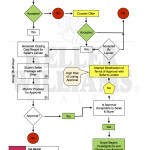
Estimated Costs to Sell Your Simi Valley HomeAs a Simi Valley Home Buyer in this market you will be confronted by many homes for sale that are Short Sales.  Before submitting an offer buyers should be concerned and careful about the process they are about to enter.  The current market conditions for buyers has been difficult for many. Inventory levels have been extremely low and Buyers have not had much freedom of choice.

Short sales are not only stressful for buyers, but they are equally stressful for sellers. The problems of a short sale can be divided into a couple different classes.

  • Experience of the listing agent
  • The number, type and complexity of the lien’s against the property
  • The tolerance level of the buyer

The experience of the listing agent is critical to the success of the short sale. In a short sale, a loss mitigation department is assigned to the particular property in question. The individual assigned has many properties to oversee. Knowing the work load these loss mitigators carry, a good listing agent will either have a short sale negotiator working on the file, or will have the time to dedicate an aggressive campaign of keeping their client’s file at the top of the lost mitigator’s stack.

An experienced short sale listing agent will properly price the property so as to not create delays with the loss mitigator. What is important is, that the bank has already hired out for several Broker Price Opinions (BPOs) and possibly an appraisal. THE BANK KNOWS THE MARKET VALUE. Underpricing these properties is a serious mistake on the part of the listing agent, both for the buyer and the seller as the bank will have no motivation to undersell the property when they have the option and power to foreclose.

How well did the listing agent pre-qualify the property before taking on the listing? A short sale may be doomed before it is ever offered for sale. The more loans and liens the property has against it, the more difficult it will be to obtain an approval to sell the property short. Most properties have a first deed of trust and many others will have a second deed of trust. The holder of the first deed can pretty much call the shots, because if they foreclose the junior lien holders will receive nothing. If the property has additional liens, such as judgments, taxes, etc.; then these junior parties  will most likely have to agree to take less than what is owed. In the case of Taxes, those will have to be paid and that will reduce what the other lien holder may expect.  In the case of a judgment, remember those judgements in California can be renewed and follow a person around a long time, so the judgement holder may not be willing to take a reduced amount.

Here is an example, the property has a first deed of trust  for $400,000, a second deed of trust for $100,000, a judgment from a lawsuit in the amount of $25,000. The home is  currently worth $400,000 with supporting appraisals and BPOs. The holder of the first deed knows that there will be costs involved to sell the home and some sort of settlement for the holder of the second and the holder of the judgment. However if the first forecloses, the second and the holder of the judgment will get nothing. What if the holder of the second or the holder of the judgment demand more than what the first will willing to give? In most cases the holder of the second will probably be looking at getting no more than $10,000 and the judgment holder a couple thousand dollars. While these types of complex short sales can close after lengthy negotiations, it is important to understand as a buyer what you are getting into. It is important as a buyer to know if the listing agent has either the personal skills to pull this off or people working with them, such as a negotiator to pull this off. It is also important to know going in that three liens against the property are going to be more difficult to get approval on than in the case there is only one lien.

The buyer’s tolerance level is going to be tied to the expectations created by the agent that is representing them. Being told that short sales are long and lengthy process is not enough.   Buyers should be educated on the process. Before the buyer writes an offer on a short sale, the buyer’s agent should get the background details on the property so the buyer knows what they could possibly be getting themselves into. Granted the buyer’s agent’s ability to get all the details will be limited,  as the buyers agent cannot do a proper public records search without the seller’s Social Security number and driver’s license. However, the majority of the information should be available from the listing agent and  from the information that real estate agents can obtain from title insurance companies. If the listing agent does not have detailed information on the number of liens against the property, then proceed with caution or maybe pass on the property until you can be satisfied with how big a task will be to negotiate a short sale.

I can only stress enough, with a short sale, is to go in with both eyes wide open.  Be prepared for a long process and know when to walk away.  you don’t have to stay away from a Short Sale if you know the things to look for and a Short Sale may be a better value than a foreclosure.

For more information on Simi Valley Short Sales:

Thanks for reading Simi Valley’s Premiere Real Estate Blog!

Author – Ted Mackel Simi Valley Real Estate Agent – Keller Williams Realty

Ted Mackel is a top producer at Keller Williams Realty Simi Valley,

specializing in Simi Valley Real Estate

(805) 432-7705