May 23, 2012

Simi Valley March 2012 Home Sales Report

simi valley homes for sale madison countySimi Valley  single-family detached home sales for the month of March 2012, significantly out paced each March since 2007. The last time more than 100 single-family detached homes sold in the month of March for Simi Valley was in 2006 before the bubble burst.

Does this mean the market has recovered and happy days are here again? If you look back at last month’s report for February, the list to sell ratio tightened, inventory tightened and prices between January and February were hitting lows. It’s no surprise that the buyers reacted so swiftly in snapping up available properties.

Looking at the closings for Simi Valley home sales in March, several trends stick out.

  • List to sell ratio is not tightening across all price ranges. In fact, in February, that ratio that tightened,  is now loosened up again. Notice that the homes under $300,000 sold for  as much as 8% on the average below the original listing price and in the $400,000 to $500,000 range, those homes sold for more than 5% below the original listing price.
  •  Simi Valley Homes over $800,000 have almost next to no closings, with no homes between $900,000 and $1 million selling at all since the beginning of the new year.
  •  Simi Valley homes under $400,000 continued to dominate monthly sales with over 50%  market share.

Inventory for single-family detached homes in Simi Valley is running close to two months, which should indicate a market advantage to the seller. However, buyers are still negotiating hard, the list to sell ratio is not tightening and erratic interest rates are not driving prices up.  Sellers are frustrated.

The Wells Fargo economic outlook for 2012 pointed out that S&P/CaseShiller Home Price Index has fallen every month since April 2011 and an additional 6% slide by the middle of 2012 can be expected, noting distressed transactions accounting for a significant proportion of sales.  Wells Fargo estimates (conservatively) that the “shadow inventory” could number 2 million homes. These are homes with payments past due 90 days or more.

For Simi Valley we are excited to see elevated numbers in closings.  Affordability is at all time highs.  It is great to see buyers get out and take advantage of extremely low interest rates. Landlords are accumulating more rental properties and many purchases will deliver decent cashflow.  We are starting to see property flippers run out of room and mostly because of the decline in pricing is catching those investors off guard.  April should continue at a brisk pace as this is a traditional time of year where buyers start to emerge from hibernation.  Low inventory should make this interesting, but I predict that any bid up frenzy will be short lived and buyers will retreat this time around when it starts to get out of hand.

March Sales Simi Valley homes


Simi Valley December 2011 Home Sales Report

This is the second year in a row that Simi Valley Home Sales Spiked in December.  Does this indicate a turn around in the Simi Valley housing Market?  Not necessarily and here are the reasons why.

  • December 2007 only 42 Single Family detached homes close escrow in one of the lowest volume months for Simi Valley home sales.
  • December 2008 only 66 Single Family detached homes close escrow in Simi Valley.
  • December 2009 = 98, December 2010 = 94 and December 2011 = 104

What happened, why the increase?  Not only has interest rates and pricing helped bring more closed escrows, but additionally the distressed market pushes to close out files before year end in the Short Sale and Foreclosure sectors.  With almost a quarter of the single family detached homes selling in December at a price point below $300,000  and 52% of all the sales for December either a Short Sale or Bank owned property, it’s too early to celebrate a recovery.

Simi Valley has certainly hit a low and has been setting a repeating trend over the last 6 months, but any sign of movement up or out of the current situation is not showing.  Looking at the entry level single family Simi Valley homes sold in December 2011,  the longer days on market and the lower list to sale price ratios show that buyers are still looking for bargains.

Simi Valley Home Sales December 2011 Chart

Simi Valley November 2011 Home Sales Report

Simi Valley Homes For Sale Long CanyonThe year is wrapping up.  Simi Valley Home Sales or should I say the number of homes sold for the year are improving.  Prices many not have improved, but the increase in volume is always good for housing.  The questions for Simi Valley are who is buying and what is selling?

The trend continues with homes under $450,000 commanding the largest sector selling in this market.  Approximately 33% of those homes are selling with low down payment or FHA financing with the balance going to Cash and conventional Financed buyers.  At Simi Valley open houses, I am running into many people looking to pick up their first rental property or additional rental properties.  Additionally, with many buyers looking to keep the home they are in as a rental and making the move up purchase on the second home.   These buyers are out in larger numbers because they understand money is cheap at the current interest rates and pricing is at it’s most aggressive point it has been at in the last few years with more single family detached Simi Valley homes selling below $300,000 than in any other year since the market collapsed.  If you follow the monthly postings here on my blog, you can see the trends in the activity.

Simi Valley Home Sales Report for November 2011

Simi Valley CA 93065 Homes For Sale

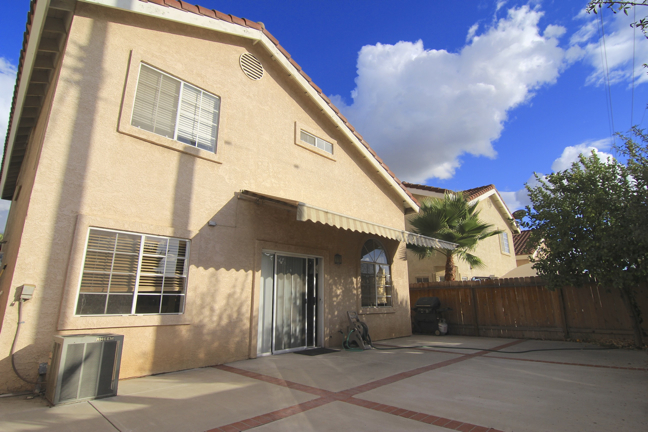
Homes for sale 2767 Licia Place Simi Valley CA 93065(Video Tour) If you are looking at Homes for Sale in Simi Valley, 2767 Licia Place could be your next home.  A very well maintained 4 bedroom two and half bathroom home in Simi Valley’s Kingspark tract near Sycamore and Alamo is centrally located, has quick access to the 118 freeway and is close to shopping including Sycamore Plaza and the Simi Valley Town Center.

Link to see MLS details for 2767 Licia Place including price and pictures

Property Information (Seller Provided)
Location – Neighborhood – Single Family Detached Style Homes

  • Cul-de-Sac (Peaceful Street)
  • Friendly Neighbors
  • Easy Freeway Access

Area Amenities

  • Near Local Hiking Trails and Bike Paths
  • approx. ¼ mile – Atherwood Elementary
  • approx. ¼ mile – Simi Adventist Hospital
  • approx. ¼ mile – Atherwood Park?
  • approx. ½ mile – Sycamore Square Shopping Center
  • approx. 1 mile – Simi Town Center (Mall)

Location – Savings

  • Not in Flood Plain (Saves on Insurance)
  • No HOA, No Mello roos

Updates and Upgrades

  • Solid Oak Front Door with Screened Side Door for Ventilation
  • Recessed Lighting
  • Ceiling Fans in every bedroom, kitchen and dining room
  • Freshly Painted New Crown Molding and Base Boards
  • Patio French Doors Screened Side Doors Open for Great Ventilation
  • Kitchen – Nicely Tiled Counter Tops, Cast Iron Sink & Tile Floors
  • Whole House Fan (1600 cfm) Quiet – Derived from Super Computer Technology
  • Mirrored Closet Slider Doors in the Bedrooms
  • Windows – Dual Pane, Argon Filled, Low-E Windows
  • Attic Fan Temp control -  On When Attic Temps Exceed 100°F

Master Bath (Remodeled Two Years ago)

  • Two Medicine Cabinets
  • Tile Flooring
  • Wall Mounted Face Mirror
  • Halogen Lights and Decorative Lights of Mirror
  • Grohe Faucets
  • Newly Tiled Shower w/ Rain Shower Head, Inset Soap Dish, Niche and Corner Step
  • Grohe Fixtures and Glass Doors

Hall Bathroom (Remodeled two years ago)

  • Dual Sink,
  • Three Door Medicine Cabinet
  • 32” Cast Iron Tub
  • Obscured Glass Shower Door
  • Ventilation and Halogen Light over Shower
  • Moen Fixtures
  • Inset Soap Dish
Laundry  Room and Half Bath off Kitchen

Exterior and other Features

  • 2 Car Garage with Roll up door.
  • Two Whirlybird Fans Installed on Back Roof
  • New “Ridge” Shingles
  • Motion Triggered Security Lights in Four Locations
  • Chimney and Whole House was re- Stucco-ed  in 2005
  • DirecTV Satellite, also Wired for Cable & ATT Uverse
  • Side Door to Laundry Room has Doggy Door
  • Rose Garden – 120 V for Fountain, etc.
  • Patio Cover and slab patio
  • Boston Ivy Covers Wall
  • Low Maintenance Shrubs
  • Side of Yard
  • Used as Vegetable Garden
  • Bushes, Electric Valves for Automatic Sprinklers and Hose Spigot
  • Side of House used as Dog Run
  • Drainage System (Not Pictured) From Backyard to Street
  • Outdoor Outlets on rear of house an switched outlet for front of house
  • Grapefruit Tree (Prolific – December)
  • Dwarf Lime Tree (Young)
  • Peach Tree (Prolific – May)
  • Plum (Non-fruiting)

Simi Valley July 2011 Home Sales Surge on Volume Average Sale Price drops $57k

simi valley homes sold market updates for simi valley home sellers and buyersSee Simi Valley Homes For Sale under $300,000

The Simi Valley Real Estate Market is in the middle of a very interesting transition and while the traditional media and my industry tend to create reports that either cheer-lead or sell subscriptions; it would be prudent to really look at what has happened in July and a trend that started back in December of last year.

Sales of Simi Valley Single Family detached housing under $300,000 has been growing in volume.  Now, more than any other time since the bottom fell out of the real estate market in 2007, we are seeing prices drop and affordability rise with continued low interest rates.   In the Spring of 2009 we saw similar pricing, but investors rushed in and pushed pricing in this segment back up to the low $300,000 range.

What becomes even more interesting this time around is that of the 19 Simi Valley homes that sold under $300,000 in July 2011, 60% were purchased with conventional financing or cash with an average price of $278,000. Cash and conventional purchasers can be attributed to increased activity by investors looking for rental properties and properties in poor condition that could be restored and flipped.

What is causing Volumes to Surge? 

1. Prices/affordability 2. Low interest rates.

What is not happening on surging volumes?

Prices are not being run up.  Looking at Simi Valley Home Sales for July 2011 we can see that 84% of all sales were under $500,000 and that the top end over $900,000 had no sales for the month.  Sluggish sales over $500,000 contributes to the lower average sale price.

Tracking the average sale price does not necessarily mean that Simi Valley Home Owners have lost $57,000 in value, what it does indicate, is when you compare the average sale price each month over the course of time you can spot trends over the whole spectrum of price ranges, any major shifts between months as we are seeing between June (Simi Valley June Market Report) and July, helps us to look close at what is selling, who is buying and what are the conditions that are driving these sales.

Real Estate Markets are local,  traditional media tends to report regional and statewide Real Estate trends, which you can see don’t amount to much when we look at the activity for Simi Valley.

The local, State and Federal economic issues, $4.00 a gallon gasoline, employment opportunities have a huge influence on home buyers.  Additionally, the Foreclosure market, Short Sale Market and Loan Modification Market are still in the middle of their mountain of problems.

What is becoming clear from my experience with buyers in my car and looking at the trending data; buyers are very interested when pricing and condition are right, but they are unwilling to jack up the pricing (above market value) in bidding wars.

While this all may sound horrific to home sellers, this is all part or a greater stability that is forming.  Increasing volumes on lower prices is positive, what we don’t want to see is decreasing volumes and lower prices.

Simi Valley homes Sales for July 2011

Simi Valley homes Sales for July 2011 Graph

How the right Lockbox can help your Simi Valley Home Sell Quicker

(Master Lock Key SafeUpdated 7/16/2011) In my last article on this subject “The importantance of a lockbox when selling your Simi Valley Home” we discussed the importance of giving flexible access.  A concern for any seller when giving access to their home is security.   In this article I will discuss the GE Supra iBox vs. an old style combination box and how that affects your listing agent’s ability to track who has been in your home..

To the right is a picture of a combination style lock box.  While these are effective in providing an extra key, once the combination is given out there is no way to track who has opened the box or control people from giving the combination code to others.  These style boxes are ideal for family members or setting up access for handymen or utility providers if the home owner so desires, but this is a very poor choice for Simi Valley Real Estate Agent showings due to the lack of control.  These mechanical combination lockboxes should only be used for temporary purposes and in my profession recommendation never use this type of box for giving access to agents who want to show your home.

Supra iBox Lock box for Simi Valley Real EstateIn my trade area (including Simi Valley and Moorpark) the SoCal MLS and the Ventura County Regional MLS have chosen to use General Electric’s Supra iBox lockbox system.  This blue iBox is controlled through an infrared communication device on the front of the box.  Agents can rent an electronic key pad or have apps loaded onto any PDA Smart phone.  There is an additional device that pairs with Android and non Apple Smart Phones so the real estate agent’s phone can communicate via infrared. Apple iPhones have a very small device the plugs into the bottom of the phone.

The iBox has a computer chip inside that stores data on all who enter through the box.  The Smart Phones and the keypads call the system every 15 mins when the software is on or the key pad is powered up and transmits which properties the agent has accessed.  If the Listing Agent has registered their lockboxes and has their current email address in the GE Supra system, the Listing agent will receive an email  almost immediately after any of their lockboxes are accessed.  The email contains the agent name and contact information of who just opened the box.  This provides security in that the listing agent knows at all times who has accessed the property with a time a date stamp and if a real estate agent has not paid their bill or is disciplined by the MLS, the system can be set to not authorize their keypad or smart phone to open any of the boxes.

The software on these computerized lockboxes allows for some very flexible programming. For example, the weekdays, Saturday and Sunday can be programmed so the boxes will open only certain times.

If you really want to crank down on who gets in your Simi Valley home, there is a CBS setting. The Call Before Showing (CBS) setting requires the buyer’s agent to call the Listing Agent for an additional unique code to open the box. Using the CBS you could prescreen the agent calling and determine if you are comfortable enough to give out the CBS. Additionally you know right then and there who is going in and at what time.  Please remember that the more restrictive you are with the times buyers can view your home, the fewer showing you will get as I pointed out in the last article The importantance of a lockbox when selling your Simi Valley Home“.

There is a note section in the software so a note will pop up right after the box is opened and you can type in any important notices for the agent, for example, “please leave your card or please turn off the lights”.  ”Feed the dog or take out the trash” is probably not a good way to greet a buyer’s agent.  Another positive feature is that the Listing agent can put their contact information in as a virtual business card and Listing comments as an electronic flyer.  When used as designed and programmed properly, the iBox lockbox system not only becomes powerful tool to increase exposure, but help provide a record of who is accessing the property and a complimentary way to help follow up on potential buyers for your Simi Valley home.

As a side note,  most properties that have been foreclosed on and are now owned by the bank, will use both boxes.  I work with several banks as a listing agent for their Simi Valley properties.  The mechanical lockboxes are used for bank personnel only, handymen etc.  Those codes are not supposed to be given to real estate agents.

The Supra iBox costs a Simi Valley Real Estate Agent approximately $130.00, I own 25 boxes.  When you are interviewing agents, ask if they have a Supra iBox.  If they don’t or they suggest to use a mechanical box; please take this advise, stop the interview and show them the door.  Homes for Sale in Simi Valley range from $150,000 (condos) in to the millions; I think it is reasonable to assume a listing agent can afford a $130 box.

There is an argument against any use of any box and that the listing agent needs to be present for all showings. That can be an article all by itself.  The short answer is that Simi Valley is a bedroom community,  people have conflicting schedules, a listing agent can only be in one place at one time.  Why limit the times a potential buyer can see your home?  And no, a listing agent cannot do a better job selling or touring the prospective buyer; many times the listing agent becomes an annoyance to the the buyer and their agent.  It really does not mater how it is done in other parts of southern California or other parts of the country, it only matters how it is done in Simi Valley because your competition (the other Simi Valley homes for sale) are using the system very effectively.  Don’t be the last to sell your home over lack of access.

Originally posted April 27, 2008.

The importance of a lockbox when selling your Simi Valley home

Simi Valley Home Sellers Lockboxes and showing access(Updated 7/15/11) The internet has changed the way Realtors do business and has changed the way buyers shop for homes.  Additionally, technology is changing our daily routines and work habits.  Buyers have limited time to look at homes for sale so they spend most of their time conducting online search for Simi Valley Homes sifting through listings before calling a Realtor.

Buyers also have busy lives, so when it comes time to look at homes, they want to go out and look at homes on their time schedule, not the seller’s.

As an active Simi Valley real estate agent showing buyers homes, I generate a showing list based on my clients needs.  Usually there are 8-9 homes on the list that closely match (my client’s wants) and that list is sorted starting as follows:

  1. Vacant listings,
  2. Listings to call, leave a message and go direct,
  3. Call and make special arrangements (put away pets etc.)
  4. Appointment needed with the agent, the owner or both.
  5. Homes that are only available at certain times or days.

Nine times out of ten times my clients will sort the list the same way if I give them the stack of paper; they want to know which houses are the easiest to see.  The reasoning behind this is that the homes on our list already fit their criteria and second that they can see as many homes possible as their time is valuable.

Clients also prefer to see a home without the seller present.  Even though a seller can be helpful in explaining things they have done to the property, home buyers like to comment about features or non features of the house and would like to do so freely.

Usually the homes (listings) that fit the first 3 scenarios above, all have lock computerized boxes.  If you have your home listed for sale and fall into the 4th or 5th scenario and wonder why you are not getting many showings, wonder no more.  I’ve shown thousands of homes in my career and EASE OF SHOWING rules the day.  If your house is priced with the competition in mind and you are not getting decent showing traffic; ask yourself which of the 5 choices you have given your prospective buyers and their Realtor.

Last here is an example of a day showing properties to buyers.  Last weekend my buyers wanted to see as many homes as possible.  There were 39 active Simi Valley homes for sale that met their criteria.  3 homes in particular said we could only come after 3:00 and each home was located far apart.  One Simi Valley home was in Wood Ranch, one in Simi Valley’s Big Sky and one in Simi Valley’s Auburn Hills by the Metrolink station.  Because we started out showings in Wood Ranch, guess which home got kicked of the list?  My buyers wrote and offer on a home on the east end of town. You are the seller, consider if you want to be an obstructionist or want to be inviting?

A blog post will follow soon “Lockboxes Part II” and I will go into depth on the power of the Supra iBox vs the old style combo box.

What’s my Home Worth

**This post was originally written April 27, 2008 and has been updated.

Simi Valley June 2011 Real Estate Market Report

simi valley homes for sale june 2011 chartThe Simi Valley June 2011 Real Estate Market Report is showing some improvement for June single family detached homes (SFD) sold.  Average home price for Simi Valley rose approximately $30,000.00 on increased volume.  While the rise in average sale price may be encouraging, it is premature to present this as any sign of recovery.  The number of SFD Simi Valley homes selling under $300,000 remained higher than past trends and the bulk of the properties selling in the Simi Valley still dominate the $300,000 to $400,000 range. An interesting statistic to note is that conventional and cash buyers are out numbering the FHA/VA buyers.  The increase volumes below $300,000 for Simi Valley SFD homes still shows softness in the overall real estate market.  Buyers are taking advantage of lower prices and low interest rates which is driving slightly higher sales volumes.

Nationally, MacroMarkets, LLC recent (June 2011) survey of industry economists and real estate experts showed that most believe that housing prices will hit their bottom this year and may have in the 1st quarter, leading to stability of pricing through 2015.

Shiller added, “If it were to materialize, such a scenario might be better described as a forecast of price stability rather than a rebound.  A 2% a year home price increase will not inspire a lot of consumer confidence.

simi valley homes for sale june 2011 table

simi valley homes for sale june 2011 chart

Conejo Simi Valley Moorpark Multiple Listing Service – Flawed Data? You decide

Conejo Simi Valley, Moorpark Multiple Listing Service – Flawed Data

flaws-mistakes-errorsDays on market is a number used to try and gage how the market is moving.  I am going to point out why this number is becoming very unreliable.  Two abbreviations you may hear are Days On Market DOM and Cumulative Days On Market CDOM.  Until just a few years ago CDOM was not tracked in the Ventura County Multiple Listing Service.  Homes that do not sell start racking up days on market. The longer a home sits on the market , the more potential buyers want to know why that home is not selling.  Some listing agents aware of the handicap of a listing with a large days on market count, have been known to cancel a listing or let it expire so the home can be re-listed. As a new listing, the DOM clock is reset to zero, however, the CDOM clock keeps ticking.

When a property is re-listed in an attempt to reset the DOM clock, a data error now enters the picture.  The MLS tracks the percentage of the Sale price to the Listed price, but when a property is re-listed this percentage calculation is not based off the original listing price or the prior listing contract (if expired).  It is calculated off the current list price which would include any reductions from the original list price. In fact the MLS always calculates the percentage off the current List Price which can seriously skew that percentage ratio.

Let’s look at two properties that this has happened with and how the MLS now presents inaccurate information on these sales.

1768 Mesa Ridge Ave Westlake Village CA was listed for $1,875,000.00 on 6/4/08. The listing expired one year later and was re-listed on 6/3/09 for $1,700,000.00.  The price was lowered four times down to $1,300,000.00.  The home finally sold for $1,435,000.00 and closed on 9/15/09.  The MLS now reports a DOM=103, CDOM=454 and the Sales Price to List price percentage of 110.38%. How can that be?  $110.38% ?  It should be calculated off the $1,875,000.00 and the Sales Price to List price percentage correct number is really is 69.34%.  Even if one could make a plausible argument that the old listing period should not be counted, the second listing period started with a list price of $1,700,000.00 and that is still far below a 110.38% result.  Even though the CDOM is listed, the CDOM is left out of the average DOM calculation which is misleading to the true story of the market timing for homes in this price range and area.

Westlake Village Home Sales 2009

Click to Enlarge – Westlake Village Sales Table

1777 Yarnton Street Westlake Village, CA was listed for $1,095,000.00 on 4/29/09.  Approximately 60 days later the price was reduced to $1,074,900.00 and the property quickly picked up an offer and sold for $1,075,000.00 after a 60 day escrow.  The MLS shows the Sale price to List Price percentage as 100.1% using the reduced list price vs the sale price incorrectly.  When using the original list price that Sale to List percentage should be 98.17%.  The CDOM and DOM is correct, but the DOM is averaged in with the incorrect DOM numbers presented on homes like1768 Mesa Ridge.

The story of Measa Ridge is that the Sellers tried for a year to get a price for their home that the buyers did not agree with; once the Sellers of Mesa Ridge finally lowered the price to a range that brought out buyers, it sold taking 454 days. The 103 days on market and the 110.38% sale to list percentage that is being used does not tell the real story.

The Story of Yarnton is very similar…..THE SELLERS HAD TO LOWER THE PRICE to get it sold.  It did not Sell at 100% of List Pirce.

This is very important to understand as days on market is not revealing a true picture of the actual market condition.

Next time you ask for the numbers, keep in mind that the quick answer just based off a quick look at a standard MLS report is going to reveal number based off the last reduced price vs the final sales price.  This market is very different than any other.  Lower price ranges are selling faster and closer to asking price that higher end homes.  Trying to ascertain market conditions has to be done regionally maybe even hyper-locally and definitely price range specific.

For additional information on this topic you can read:

Thanks for reading Simi Valley’s Premiere Real Estate Blog!
Author – Ted Mackel Simi Valley Real Estate Agent – Keller Williams Realty
Ted Mackel is a top producer at Keller Williams Realty Simi Valley,
specializing in Simi Valley Real Estate
(805) 432-7705

Texas Tract Simi Valley Sales Trends from 2004 through June 2010

 Texas tract Simi Valley California

Properties for sale in the Texas Tract

Simi Valley’s Texas tract is one of the more popular areas north of the 118 freeway for home-buyers moving or relocating to Simi Valley. Typically comprised of older homes on larger lots with wide sweeping streets on a gentle sloping downhill, pricing has always been attractive to the largest segment of the market.

Texas tract single-family detached homes is made up of four different subdivisions. The Bellwoods, the Alpine’s, the Parklanes, and the New Monterey’s. The Belwoods and the Alpine’s were the first to tract built nearly 1960s. The shopping center located at the corner of Alamo and Tapo streets was anchored by a supermarket  (and if I remember correctly was an Alpha Beta at the time) that center is named The Belwood Center which now houses Fresh and Easy Markets and Yankee Doodles.

Below are some charts and tables of the sales data for Simi Valley’s Texas Tract beginning January 1, 2004 up through June 28, 2010. The average sales price in the area has dipped significantly below the 2004 averages and looks to be settling in the low $400,000 range. You may also notice that the volume has significantly slowed as well. The high number of foreclosed properties and short sales has added a negative impact on sales in the area.

While homeowners in the tract are patiently waiting for the recovery, those homebuyers looking to relocate into Simi Valley have an opportunity to find good value in one of Simi Valley’s most coveted tracts on the north east end of Simi Valley.

Texas Tract Simi Valley Home Sales Trends form 2004 through 2010

Sales broken down by year with highs, lows averages and days on Market.

Texas Tract Simi Valley 2004 Sales Data
AVERAGE
Sale Price
$504,993
HIGH
Sale Price
$615,000
LOW
Sale Price
$335,000
List to Sale Ratio 97.76%
Average Days on Market (DOM) 14
Number of Homes Sold 59
Texas Tract Simi Valley 2005 Sales Data
AVERAGE
Sale Price
$572,713
HIGH
Sale Price
$673,000
LOW
Sale Price
$399,000
List to Sale Ratio 97.60%
Average Days on Market (DOM) 14
Number of Homes Sold 69
Texas Tract Simi Valley 2006 Sales Data
AVERAGE
Sale Price
$608,810
HIGH
Sale Price
$760,000
LOW
Sale Price
$395,000
List to Sale Ratio 97.10%
Average Days on Market (DOM) 45
Number of Homes Sold 52
Texas Tract Simi Valley 2007 Sales Data
AVERAGE
Sale Price
$588,545
HIGH
Sale Price
$700,000
LOW
Sale Price
$485,000
List to Sale Ratio 94.65%
Average Days on Market (DOM) 81
Number of Homes Sold 33
Texas Tract Simi Valley 2008 Sales Data
AVERAGE
Sale Price
$443,736
HIGH
Sale Price
$712,500
LOW
Sale Price
$320,000
List to Sale Ratio 87.71%
Average Days on Market (DOM) 89
Number of Homes Sold 35
Texas Tract Simi Valley 2009 Sales Data
AVERAGE
Sale Price
$432,076
HIGH
Sale Price
$700,000
LOW
Sale Price
$315,000
List to Sale Ratio 97.07%
Average Days on Market (DOM) 67
Number of Homes Sold 37
Texas Tract Simi Valley 2010 Sales Data
AVERAGE
Sale Price
$427,617
HIGH
Sale Price
$510,000
LOW
Sale Price
$350,000
List to Sale Ratio 95.05%
Average Days on Market (DOM) 47
Number of Homes Sold 12