February 3, 2012

Who pays for What? Simi Valley Home Buyers & Home Sellers want to know

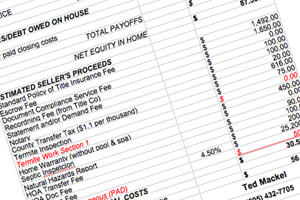
Estimated Costs to Sell Your Simi Valley HomeWhat is customary for a buyer and seller varies from state to state and in some states like California what is customary for buyers and sellers in Southern California may be different than in Northern California. The following list is what is generally customary for  Home Buyers and Sellers in the Simi Valley and Southern California area on purchases, not involving distressed properties (i.e. Short Sales and Foreclosures/Bank Owned):

The SELLER can GENERALLY be expected to pay:

  • Real Estate Commissions
  • Document preparation fee for deed
  • Documentary transfer Tax (deed tax stamps), if any
  • Pay off all loans in Seller’s name
  • Interest accrued to lender being paid off
  • Statement fees, re-conveyance fees and any prepayment penalties
  • Termite inspection (or according to contract)
  • Termite work (or according to contract)
  • Home warranty (or according to contract)
  • Any judgments, tax liens, etc., against the seller
  • Tax proration (for any taxes unpaid at the time of transfer title)
  • Unpaid homeowner’s dues
  • Recording charges to clear all document of record against the seller
  • Any bonds or assessments (or according to contract)
  • Any and all delinquent taxes
  • Natural Hazards Disclosure
  • Seller notary fees
  • Escrow fee (one half)
  • Repairs on deferred maintenance (if agreed to or according to contract)
  • Title insurance premium for owners policy
  • Homeowners Association transfer fee and documents fee
  • City transfer/conveyance tax (or recording contract)
  • Mandatory Government Compliance issues (i.e. Smoke detectors, Carbon-monoxide detector, water heater bracing, etc.)

The BUYER can GENERALLY be expected to pay:

  • Title insurance premium for lenders policy
  • Escrow fee (one half)
  • Document preparation (if applicable)
  • Buyer notary fees
  • Recording charges for all documents in buyers name
  • Tax proration (from date of acquisition)
  • Appraisal
  • Cost to run Credit Scores
  • All new loan charges (except those required by lender for seller to pay)
  • Interest Buy-down points (or according to contract)
  • Interest on new loan from date of funding to 30 days prior to first payment date
  • Assumptions/change of records fees for takeover of existing loan beneficiary statement fee for assumption of existing loan inspection fees (roofing, property inspection, sewer, pool, geological, etc.)
  • Buyer insurance premium for first year

Related Articles:

5 Reasons Home Values Should Not be your Biggest Worry

How in the world can I get away with saying Home Values should not be your biggest worry? I am sure this statement is enough to get under the skin of any homeowner/home seller and those buyers out there looking for the best deals possible.

As a seller, the goal is to get the highest price possible and as a buyer, the goal is opposite. So why not worry about the value? Because as a home seller or home buyer you have little control over market values. Below are the five reasons to consider which may help you sell your home at the maximum possible price or purchase a home at the best possible price.

  1. Your are not in control
  2. Consider the Contrarian
  3. Population Growth & California
  4. Keeping regional data reports in perspective
  5. You home is a place to live not a commodity

1. You are not in control. There are many outside contributing factors that affect Home Values.  Everything from area employment opportunities, the local and regional economy, mortgage interest rates, supply and demand and location.  Any one of these conditions will impact home values significantly and if two or more of these conditions are present in the market at the same time, the impacts are even more dramatic.

2. Consider the Contrarian. Who is the contrarian? A Contrarian as known in the stock market is the person that goes out and buys Exxon stock after the Valdez crashes and fills Alaska’s waters with crude oil. While the event causes significant environmental damage and investors sell off all their Exxon stock, the Contrarian will come in and buy the stock while on sale knowing that Exxon as a huge company can weather the lingering effects of accident.  Are there real estate contrarians? I believe so. Take a state like California and even in the worst economies, real estate will eventually recover. Climate and opportunity has always driven California.

For example looking at the West side of Los Angeles, areas like Brentwood and the Palisades may be affected negatively by a declining real estate market. Now consider their proximity to business and opportunity in Santa Monica, Century City, downtown, the movie/tv industry in Burbank and Hollywood and it becomes easier to understand why those areas over the course of history in Southern California have remained  affluent and highly desired and tend to recover quickly.

3. Population Growth & Control. California’s population increased by approximately 5 million over last decade. California population growth in the past was tied to people migrating from other states. This is not happening anymore. While population growth in California has slowed due to a higher cost living, the population continues to grow through increased birthrates and foreign immigration.  If and when the state government can fix it’s own financial problems, as the recession eases and unemployment begins to retreat, California’s attractiveness will return and the slowdown in population growth for the state will end. Because of the climate and the opportunities California has afforded those who have moved here over the course of history, the long-term outlook for our state will always be positive. The big take-away is that California is increasingly become very diverse culturally and we all should consider that doing business with our foreign immigrants will increase and be very common.

4.  Keeping regional data reports in perspective. The news typically reports regional trends for real estate and rarely delves into the specifics of any local or hyper local market. Traditional news, such as the papers and television are tied to viewership and advertisers. Stories are watered down and massaged to gain readers and viewers. The chore of reporting detail below a regional level has been absent from the newspapers for a long time. Over two years ago Los Angeles Times closed down their real estate section.

Consumers have access to real-time information on market conditions through many internet sources. The median home price for Ventura County is essentially useless for a homeowner in Simi Valley. That median price for the County takes in account  million-dollar homes in Camarillo, entry-level homes in Oxnard and all the neighborhoods in-between. If you live in a single-family detached home in Simi Valley that is approximately 2500 square feet, 20 years old with an average size lot, the market conditions of the homes on the extreme ends of entry-level and the million-dollar markets really don’t matter. Besides, buyers looking for homes in Camarillo typically do not have a search broad enough to include Simi Valley. Local market trending is extremely important when determining home values.

5. Your home is not a commodity. Probably the biggest thing that has been lost in translation for those at the cusp of the baby boom, generation X and generation Y, is how home valuations function over time. Over the last 10 to 15 years younger generations have placed home ownership as a high yielding investment. This is in complete contrast to the older baby boomers and those who grew up in the depression.

Since home values have been recorded, if you go back historically, a maximum of a 6%  average annual increase in value is what you will find. The 10%, 15% and 20% gains we saw just five or six years ago are more a fluke tied to lending and hyper consumerism.   The Wild West mentality in the banking industry will not return any time in the near future, which ties people’s incomes to how much they can borrow.  As people can  only qualified for monthly payments tied to their income, home pricing will return to historical trends.  Historically home prices have always been a function of a person’s real income and the market is now correcting to that trend. Doubling or gain large capital gains form the sale of a home purchased today is going to take a very long time.

The sum this all up, Home Sellers need to be very cognizant of their local market conditions, how much competition they have in the market place and what the buyer can afford to pay in price.  Home Buyers need to understand that there a very good buys out there now, but the screaming deals are not the norm, no one is giving their house away.  Short Sale prices are ultimately determined by the Seller’s lender and foreclosures on the open market are subject to healthy buyer competition.  Write down your Home Selling or Home Buying goals and see if that fits with the current market conditions before moving forward as this may help you avoid frustration.

Looks like The California 1st Time Home Buyer Tax Credit Has Been Exhausted

 Simi Valley real estate  homes for sale double dip recession(Aug 6th) From the Franchise Tax Board’s Website – California 1st time home buyers are being notified that the hundred million dollars allocated for tax credits is most likely already exhausted. The plan was to accept some 28,000 applications before the cutoff. There been over 31,000 applications submitted and the Franchise Tax Board has determined that it will continue to accept applications up through August 15, 2010. It is most likely that those who apply between now and August 15 will have a very slim chance of qualifying for the tax credit. The concern was that in the initial applications received there were many duplicates and inaccurate applications. Also any applications submitted 14 or more days after close escrow were being rejected.

Ding Dong the Witch is Dead – 1st Time Home Buyer Tax Credit Expires

Ding Dong the Witch is DeadFriday, April 30th – The 1st time home buyer tax credit expired at midnight June 30, 2010. Stick a fork in it’s done! Ding dong the witch is dead! Hallelujah!

Okay what’s wrong with me? While the first-time home buyer’s tax credit was designed to stimulate the market and I’m sure you could probably find a few parts of the country where this did occur, but in Simi Valley California the first time home buyer tax credit had very little impact if any on the sale of homes in the last year and a half (see table of Single Family detached homes sold in Simi Valley).

Simi Valley Homes Sold from 2006 through April 2010

The 2010 first-quarter sales of Simi Valley homes saw a sluggish start. If the tax credit was the panacea then why did sales dramatically tail off after a record breaking December? While it looks like April 2010 sales picked up and will close out strong; the lesson here is that the increased activity we are seeing in April and that will follow in May and June, is deadline related. The deadline is what’s motivating these buyers to pull the trigger. Since there was no threat of losing the tax credit, buyers continued to flounder around and be critical of their purchase until the deadline drew near.

In California we have two more deadlines. Those taking advantage of the first-time home buyer tax credit only needed to get a home under contract by midnight of June 30, 2010. The next step, especially important if that home under contract was a short sale, is to get that escrow closed before June 30, 2010 to qualify for that tax credit. The second deadline will be the end of the year for those purchases in the state California. California in its infinite wisdom and expert money management activities at the state capital (sarcasm intended), has seen fit to offer $10,000 tax credit to home buyers for the remainder of 2010.

For those that took advantage of the tax credit, congratulations! For those who feel they may have missed out, I can only say that the government, my industry and the banking industry will fail big time if they try to force a market.  There are many problems lingering in the markets, far too large to continue with tax credits.  My phone rang more this weekend after the tax credits expired than it did in the last several weekends,  I think that those planning to buy will still be able to find good properties for bargain pricing.  Patients is all you need as a buyer for Simi Valley properties.

Search for Homes in Simi Valley California Simi Valley Property Values

Thanks for reading Simi Valley’s Premiere Real Estate Blog!

Author – Ted Mackel Simi Valley Real Estate Agent – Keller Williams Realty

Ted Mackel is a top producer at Keller Williams Realty Simi Valley,

specializing in Simi Valley Real Estate

(805) 432-7705

SB 401 – What’s My Short Sale Tax Liability With The State of California?

Short Sale Tax LiabilitySo, you’re trying to figure out if you have California Tax Liability With The State of California if you sold your Simi Valley home via Short Sale or are planning to short sell your home.

SB 401 is set to work in line with the IRS Mortgage Debt Relief Act of 2007 forgiving tax liabilities that could affect Californians who disposed of their property through a Short Sale in 2009 . It also includes relief for those who received a reduction of principle through a Loan Modification or Cancellation of Debt income from a foreclosure.

Who is affected:

  • If you were party to or will be a party to a Short Sale, Foreclosure or Loan Modification between 2009 and 2012.  2007 & 2008 already had this provision, SB 401 extends this relief now up through 2012.

What Do You Have to Do to Participate?

WARNING:  There are serious liabilities related to home loans if you are foreclosed on, participate in a deed in lieu or participate in a Short Sale.  Make sure to consult with an attorney

DISCLAIMER: I am not a Tax professional nor is this information offering you Tax Advise. This is merely a report on the current passage of SB 401.  All information above should be verified with your Tax Preparer/Professional.

For more information you can read: Simi Valley Short Sale Information on this blog HomeBuysBlog.com

Thanks for reading Simi Valley’s Premiere Real Estate Blog!

Author – Ted Mackel Simi Valley Real Estate Agent – Keller Williams Realty

Ted Mackel is a top producer at Keller Williams Realty Simi Valley,

specializing in Simi Valley Real Estate

(805) 432-7705

Are Tax Credits Luring Simi Valley Home Buyers in a Cash for Clunkers Scheme?

Simi Valley Home buyer tax creditsFederal and California tax credits were created to lure home buyers into the market.  Simi Valley home buyers have a small window of opportunity to take advantage of both tax credits and double-dip the system. The federal first-time home buyer tax credit of $8000 is set to expire April 30. More specifically, home buyers qualify for this program will need to have a house under contract by April 30, 2010. They will need to have escrow close prior to June 30, 2010. At the same time, starting May 1, 2010  any escrows closing prior to June 30 will qualify for the California first-time home buyer tax credit of $10,000. While this credit is good through December 31st, 2010. The opportunity to double dip the system needs take place before June 30.

My main concern with these home buyer tax credit programs is that  Simi Valley home buyers (especially low down payment buyers) will rush to purchase a house and end up chasing  a tax credit cash for a clunker. Many of the properties for sale in Simi Valley currently are short sales and foreclosures. These properties typically have significant amounts of deferred maintenance and repair issues. Many times the repairs needed to restore these properties will far exceed any monies gained in tax credits. Keep in mind, at the California tax credit is spread out over three years and not given all at once.

My second concern is that these tax credits are really not creating any additional interest in the market. In fact  Simi Valley home sales volume and average home prices have dropped every month since  December 2009. I believe that the attractive affordability and low interest rates are driving the market currently and that sales would not suffer much if at all if the tax credits were to go away.

Those Simi Valley home buyers concerned that they may be missing a market can step back, relax and breathe a sigh of relief as the market is certainly near or at the bottom and will be for a long time before the market breaks through and start pushing out to a real recovery.

If you are a Simi Valley home buyer there is limited time to be able take  advantage of the double-dip but don’t get caught up in a frenzy and end up with a property  that will cost far more to fix up and what you will gain tax credit.

If you are a Simi Valley home seller, if your home is been on the market for a while and has not received any offers, now is the time to review your pricing strategies compared to other homes on the market that compete with your home and the homes that have sold in the last 120 days that compete with your home and  adjust your pricing to bring a buyer before April 30.


Search for Homes in Simi Valley California Simi Valley Property Values

Thanks for reading Simi Valley’s Premiere Real Estate Blog!

Author – Ted Mackel Simi Valley Real Estate Agent – Keller Williams Realty

Ted Mackel is a top producer at Keller Williams Realty Simi Valley,

specializing in Simi Valley Real Estate

(805) 432-7705

Should the listing Agent be present on Showings?

Should the listing Agent be present on Showings?

What do you think? One consideration for California is that our trade areas cover far larger areas than other places in the United States. The Supra Lockbox system works very well in the Simi Valley Moorpark, Conejo Valley & San Fernando Valley areas. It is very easy for an listing agent to be far away when a property needs to be shown.

This topic in the industry has always created spirited debate among agents. It invokes passion discussion about how to service clients. It seems for the most part in the East Ventura County area and West San Fernando Valley area, the lockbox is predominant. But there are clients and areas where lock boxes are not used. So whether you’re a home seller, potential home seller a real estate agent input on the subject is greatly appreciated. Please use the comments section below.

Other related Articles:

The importance of a lockbox

Lockboxes Part II

California High Speed Rail

California High Speed Rail

It will probably cost a fortune and everyone will complain, but like most public works projects, when completed it will be appreciated many years after it is built and operational.

If you want to take train from Simi Valley to San Francisco. First you have to go downtown to Union station and then take a bus to Bakersfield to catch the train. It takes all day. I say bring on the bullet train!

For more information and the map, SEE:  www.cahighspeedrail.ca.gov

Adjustible Rate Mortgage Reset Schedule

Adjustable Rate Mortgage Reset Schedule

Yesterday I attended the California Association of Realtors Tech Tuesday.  At the Keynote session, we were given a quick economic look and the statistical data for future home buyers before digigng into prognosticating the tech trends coming for our business.  Part of the discussion included how much longer we will be dealing with the current market conditions.  The picture below is a chart that was displayed showing Adjustable Rate Mortgage Reset Schedule.

The Adjustable Rate Mortgage Reset Schedule has much to do with the current market declines we are experiencing now.  If you look at the chart below, round two of the these Adjustable Rate Mortgage Resets is coming in 2010 and 2011.  When those mortgages reset, we will see another influx of short sales and foreclosures.  What I am most concerned with in looking at the chart data is the following:

  • The top dark blue portion of the bars are Unsecuritized ARMS  (HELOCs?)
  • The greenish section of the Bars are the Option Arms
  • Of these loans how many were the “Liars Loans”?
  • If a good portion of these ARMs are “Lairs Loans” then how are those loans going to avoid a shortsale or foreclosure when they cannot refinance because their home is worth less than the outstanding financing and /or then cannot qualify for the refinance because now they have to prove they have the income instead of just “Stating” their income?

Looking back at past market history, recovery has never been over night.  Simi Valley home sellers need to be mindful of this data as it will be sometime before we see home prices return to 2004-2005 levels.  What this means for Simi Valley home buyers is that the market will continue to provide very good buys for those that are patient, prepared and determined.

California Association of Reators Tech Tuesday

July 1st is Handsfree day in California

That’s right, you need to be handsfree in California while driving your car if you are using a cell phone. If you car is not Bluetooth ready, then you need to get a device. There is either the ear-bud style or a speaker phone style. For ear buds I see the Jawbone and the Motorola H680 as to very popular models in the Real Estate industry.

There are also speaker style devices for those who do not want to look like Lt Uhura from Star Trek.  These speaker phone style devices are small, compact and clip to your visor.  If you want privacy when others are in the car you will need an earbud style device so choose carefully as a good quality handsfree device is not cheap.

For those who are under the age of 18, Cell phone use while driving is prohibited and the use of hand free devices is no exception.